StopWatt Reviews 2026 [HONEST REPORT] – Real Results, Complaints, Pricing & Our Final Verdict!
Electricity bills have become a major household expense, and it is understandable that consumers are looking for simple ways to reduce energy costs. This has led to growing interest in small plug-in devices marketed as electricity-saving solutions. StopWatt is one such product, presented as an electricity-saving box designed to help households manage power consumption and potentially lower their monthly electricity bills.
At first glance, StopWatt appears simple to use. The compact device is plugged into an electrical outlet, allowing homeowners to use it without changing their appliances or installing complicated equipment. Its marketing focuses on improving electrical efficiency and reducing unnecessary energy use.
But does a device like StopWatt actually save electricity? What does it do, and should consumers expect a significant reduction in their power bills? This StopWatt review looks at how the product is presented, what buyers should understand about electricity-saving devices, and the practical steps that can make a real difference to household energy consumption.
Ready to take control of your electricity costs? Explore StopWatt today!
What Is StopWatt?
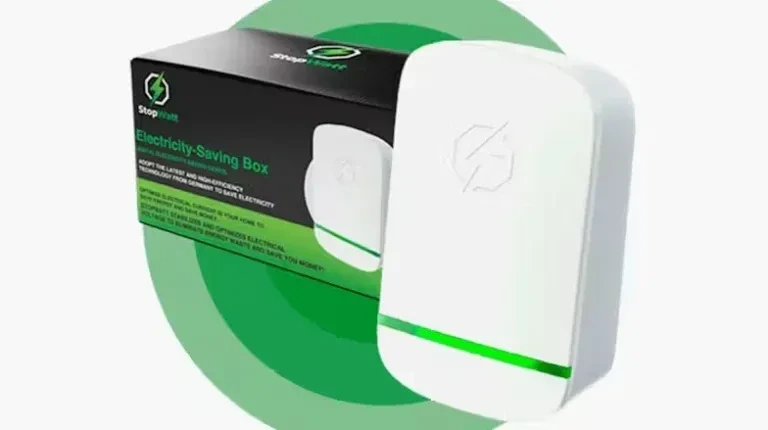
StopWatt is marketed as a compact electricity-saving box intended for use in homes and other electrical environments. The product is designed to plug directly into a wall outlet rather than requiring professional installation.
The idea behind products in this category is generally related to electrical efficiency, power quality, or power-factor correction. Some devices claim that they can stabilize electricity, reduce wasted power, protect appliances, or optimize the flow of electricity through a household's electrical system.
For an ordinary residential customer, however, the most important question is not whether electricity can theoretically be optimized. The key question is whether the device can meaningfully reduce the amount of electricity that the utility meter records and the customer is charged for.
That distinction is important when evaluating StopWatt or any similar plug-in energy-saving product.
Discover how StopWatt fits into your home energy-efficiency routine—learn more now.
How Does StopWatt Work?
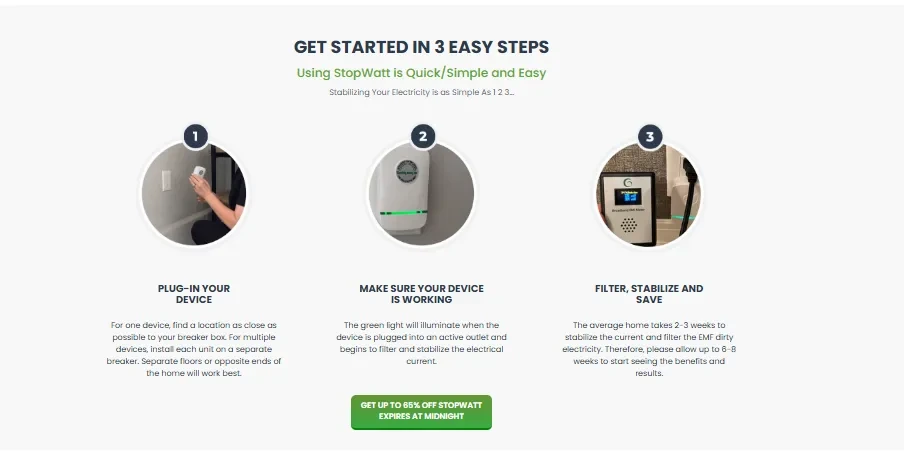
StopWatt is intended to be easy to operate. The general concept is to plug the device into an available electrical socket, where it remains connected while household appliances operate normally.
Devices marketed in this category sometimes describe their function using terms such as:
- Power optimization
- Voltage stabilization
- Power-factor correction
- Electrical noise reduction
- Improved energy efficiency
- Reduction of wasted electricity
These terms can sound impressive, but consumers should understand that power factor and electricity consumption are not the same thing.
Power factor describes the relationship between useful electrical power and apparent power in an AC electrical system. Certain industrial or commercial customers can have financial consequences associated with poor power factor, depending on their utility arrangements. Residential electricity billing, however, is commonly based primarily on actual energy consumption, measured in kilowatt-hours (kWh).
Therefore, improving power factor does not automatically mean that a household will see a large reduction in its electricity bill.
Does StopWatt Really Save Electricity?
This is the most important part of any StopWatt review.
A plug-in box cannot simply make electrical appliances use dramatically less energy without changing how those appliances operate. A refrigerator, air conditioner, water heater, electric oven, heater, or other high-power appliance still needs the energy required to perform its intended function.
For example, if an electric heater requires a particular amount of power to produce heat, plugging a small device into another socket does not fundamentally change the amount of heat the heater must produce.
Likewise, a refrigerator still needs energy to maintain its internal temperature, and an air conditioner needs energy to remove heat from a room.
This does not necessarily mean that StopWatt is useless in every possible electrical environment. Power-quality equipment can have legitimate applications in particular systems. But consumers should be cautious about claims suggesting that a small plug-in device can dramatically reduce an ordinary home's electricity bill simply by being plugged into an outlet.
Independent measurement is the best way to establish whether a product produces meaningful savings in a specific household.
Looking for a simple way to monitor your energy-saving efforts? Check out StopWatt today!
StopWatt and Power Factor
One of the concepts often associated with electricity-saving boxes is power-factor correction.
Some electrical loads, especially motors and other inductive equipment, can draw current in a way that results in a power factor below one. Capacitors and other equipment can be used in appropriate electrical systems to compensate for this behavior.
In industrial facilities, power-factor correction can sometimes reduce certain electrical losses and may help avoid utility penalties. But household electricity billing is different.
If a homeowner is billed based on kilowatt-hours, improving apparent power or power factor does not necessarily reduce the number of kilowatt-hours consumed by the appliances.
This is why shoppers should avoid assuming that technical-sounding claims automatically translate into substantial household savings.
StopWatt Features
Based on the product's presentation, StopWatt is promoted around convenience and straightforward operation.
Plug-and-Use Design
One of the most appealing features is the simple design. There is no indication that users need to redesign their electrical system or install the device throughout the home. A plug-in format makes the concept accessible to consumers who want a quick energy-efficiency solution.
Compact Size
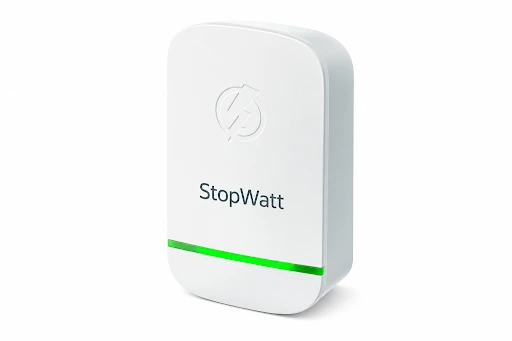
The unit shown in the product image is relatively compact and designed to occupy a standard wall outlet. Its small footprint makes it less intrusive than larger electrical equipment.
No Major Lifestyle Changes
A major selling point of products like StopWatt is convenience. Consumers do not have to remember to adjust their habits every time they use an appliance. The device is intended to operate in the background.
However, convenience should not be confused with proven savings. The actual benefit needs to be evaluated separately.
Is StopWatt Safe?
Electrical safety should always be a priority with any plug-in device.
Consumers should check whether a product is appropriately certified for their country and electrical system before purchasing or using it. The device should also be used according to the manufacturer's instructions.
Users should avoid plugging electrical products into damaged sockets, overloaded extension cords, or unsuitable adapters. Signs such as overheating, burning smells, discoloration, buzzing, or unusual electrical behavior should not be ignored.
If an electrical device becomes unusually hot or behaves unexpectedly, it should be disconnected and inspected by a qualified professional.
Safety certification and compliance are especially important because electrical standards vary between countries. A product intended for one market may not automatically be appropriate for another.
Don’t let rising electricity costs catch you off guard—explore StopWatt now.
What Are the Best Ways to Reduce an Electricity Bill?
If your primary goal is to lower your monthly electricity bill, there are several strategies that generally deserve more attention than a plug-in energy-saving box.
1. Improve Air-Conditioner Efficiency
Air conditioning can be one of the largest electricity expenses in a warm climate. Cleaning filters, maintaining the unit, improving room insulation, and choosing an efficient temperature setting can all help reduce unnecessary consumption.
2. Use Energy-Efficient Appliances
Older appliances can consume substantially more electricity than modern efficient models. When replacing a refrigerator, air conditioner, washing machine, or other major appliance, compare energy-efficiency ratings and estimated annual consumption.
3. Reduce Standby Consumption
Many electronics continue to consume small amounts of electricity while they are switched off but remain connected to the outlet. Individually, the consumption may be small, but multiple devices operating continuously can add up.
Unplugging equipment that is rarely used or using smart power strips can help manage standby loads.
4. Use LED Lighting
LED bulbs generally consume significantly less electricity than traditional incandescent lighting while providing similar illumination. Replacing frequently used inefficient bulbs can be a simple way to reduce consumption.
5. Monitor Your Electricity Usage
One of the most effective approaches is to determine where your electricity is actually going.
Instead of guessing, monitor your meter readings or use a suitable electricity monitor for individual appliances. Once you know which devices consume the most energy, you can focus your efforts where they will have the greatest impact.
StopWatt Pros and Cons
Before buying any electricity-saving device, it is useful to consider both advantages and limitations.
Potential Pros
- Compact and convenient design
- Simple plug-in concept
- Does not require major changes to everyday routines
- Easy to install compared with professionally installed electrical equipment
- May be attractive to consumers interested in power-management technology
Potential Cons
- Claims of dramatic household savings should be treated cautiously
- Power-factor improvement does not automatically equal lower residential kWh consumption
- Actual savings can vary depending on the electrical system
- Consumers may not see noticeable bill reductions
- Marketing claims should be supported by credible independent testing
Want to learn more about StopWatt? See the product details and decide for yourself!
StopWatt Pricing in 2026
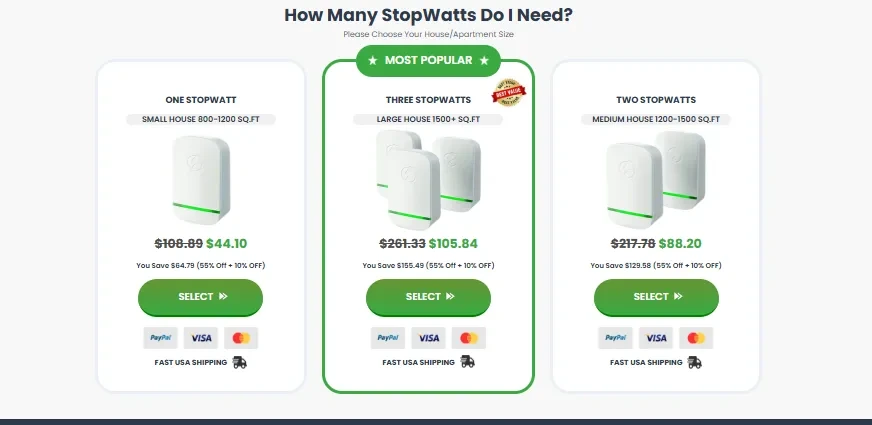
StopWatt is currently available in three simple package options:
- 1 StopWatt: $44.10 — For small homes
- 2 StopWatt: $88.20 — For medium-sized homes
- 3 StopWatt: $105.84 — For large homes (Most Popular)
StopWatt Contact Information
For questions about orders, refunds, shipping, or the product, the company's published contact information includes:
- Email: support@stopwatts.com
- Phone: The company's current contact pages show (877) 636-6738.
- Return address: 1 N Dixie Hwy, Bay 14, Boca Raton, FL 33431
Who Might Consider StopWatt?
StopWatt may appeal to homeowners who are interested in experimenting with electrical-efficiency products and want something that is simple to install.
However, it should not be viewed as a substitute for proven energy-efficiency measures.
Someone experiencing unusually high electricity bills should first investigate the underlying cause. A faulty appliance, inefficient air conditioner, electric water heater, poor insulation, excessive heating or cooling, or simply increased usage can have a much larger effect on the bill than a small plug-in device.
In other words, identifying the source of energy consumption is usually more valuable than looking for a single gadget that promises to solve the entire problem.
Take the next step toward smarter energy management—discover StopWatt today.
Is StopWatt Worth Buying?
Whether StopWatt is worth buying depends largely on what you expect from it.
If you expect a small plug-in box to dramatically reduce your household electricity consumption without changing appliance usage, you should approach those expectations with caution. Consumers should not assume that advertised percentage savings will automatically appear on their utility bills.
If you are considering purchasing StopWatt, look for transparent technical specifications, appropriate safety certifications, clear warranty information, and credible independent testing. Most importantly, distinguish between claims about electrical power quality and claims about actual energy consumption measured in kWh.
That distinction can help you make a much more informed purchasing decision.
Curious about this compact electricity-saving device? Find out more about StopWatt now!
Final StopWatt Review Verdict
StopWatt is marketed as a convenient electricity-saving box that can be plugged into a household outlet and left to operate in the background. Its compact design and simple concept make it easy to understand why products like this attract attention from people looking for ways to reduce rising energy costs.
However, consumers should remain realistic about what a small plug-in device can accomplish. Claims of major electricity savings should not be accepted without reliable, independent evidence showing a measurable reduction in actual household energy consumption.
Power-factor correction and power-quality improvements can be legitimate concepts in electrical engineering, particularly in appropriate commercial and industrial applications. But those concepts do not automatically mean that an ordinary household will use fewer kilowatt-hours or receive a dramatically lower electricity bill.
For homeowners who want dependable savings, the strongest approach is to focus on measurable energy efficiency: use LED lighting, improve air-conditioning efficiency, replace inefficient appliances, reduce unnecessary standby loads, and monitor electricity consumption.
OfficialSite – https://factcheckreviews.com/get-stopwatt/
Facebook @OfficialSite – https://www.facebook.com/StopWatt.Official.Website
https://www.facebook.com/groups/932957092399729
Comments
Post a Comment